INTRODUCTION OF SECTION-8 MICRO – FINANCE COMPANY The Micro finance Company is basically the financial institutions that provide small-scale financial services in the form of loan, credit or savings. These companies are introduced to ease the credit system for small businesses as they don’t get a loan from banks due to their complex process. Therefore it is commonly named as a Micro-credit, Micro-benefit organization. They offer small loans to various small businesses or households that do not have access to formal banking channels or eligibility for loans. They provide small loans that are less than Rs.50,000 for rural areas and for urban it is Rs.1,25,000. The simplest way to register a Microfinance Company in India is to register the Section-8 Company with MCA (Ministry of Corporate Affairs). Without charging any marginal money or guarantee security. It can give loans at inexpensive rates directed by the RBI and central government. They are a huge support to all rural and ...
BACKGROUND In view of the COVID-19 outbreak, the Ministry of Corporate Affairs (‘MCA’) had come up with the circular dated April 08, 2020 , providing certain relaxations from the provisions of Companies Act, 2013 and rules made thereunder including conducting the extra-ordinary general meeting for transecting the business of urgent nature through video conferencing (‘VC’) and other audio visual means (‘OAVM’) till June 30, 2020. Further, in order to provide more clarity on the modalities to be followed by the companies for conducting EGM viz. manner of issuance of notice, voting by show of hands and postal ballot etc., another circular dated April 13, 2020 (Collectively referred to as ‘EGM Circulars’) was brought in force. In continuation to the aforesaid circulars and in view of the social distancing norms and other restrictions thereof, MCA provided an extension of 3 months for holding annual general meeting (‘AGM’) for the companies having the calendar year as the financi...
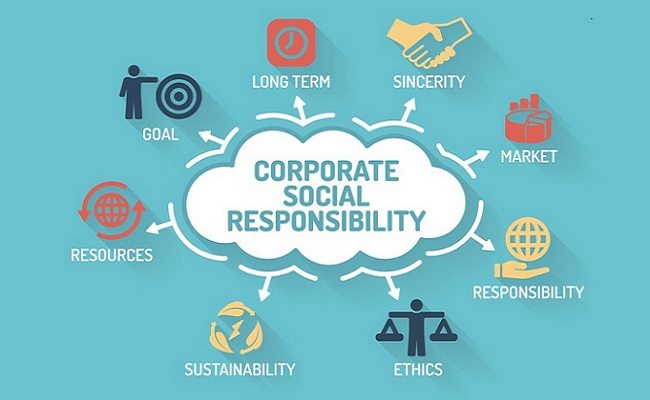
Corporate Social Responsibility (CSR) is well accepted among shareholders as well as with various other stakeholders of society in India. The term CSR is new normal for Indian organisations. CSR tends to focus on what is done with profits after they are made . Larger corporations understand that CSR is an integral part of business framework for sustainable development. Companies also consider that CSR is an approach towards sustainable development and focus on the triple bottom line of Economic, Environmental and Social performance. CSR Shall be Considered as a Responsibility of Corporate towards Society and shall not be taken as Charity. In India, the term Corporate Social Responsibility (CSR) is widely being used even though related concepts and terms, such as business responsibility, sustainable development, philanthropy, sustainability, corporate citizenship, responsible business, triple bottom line, shared value, value creation, business ethics, socio-economic resp...


Comments
Post a Comment